
Stamp Value Scanner Online: Scan a Stamp by Photo
A stamp value scanner helps you check what a stamp may be worth from a clear photo. With Stampy, you can scan a stamp, identify the issue, review rarity and condition clues, and get an estimated value before spending hours searching catalogs or auction listings.
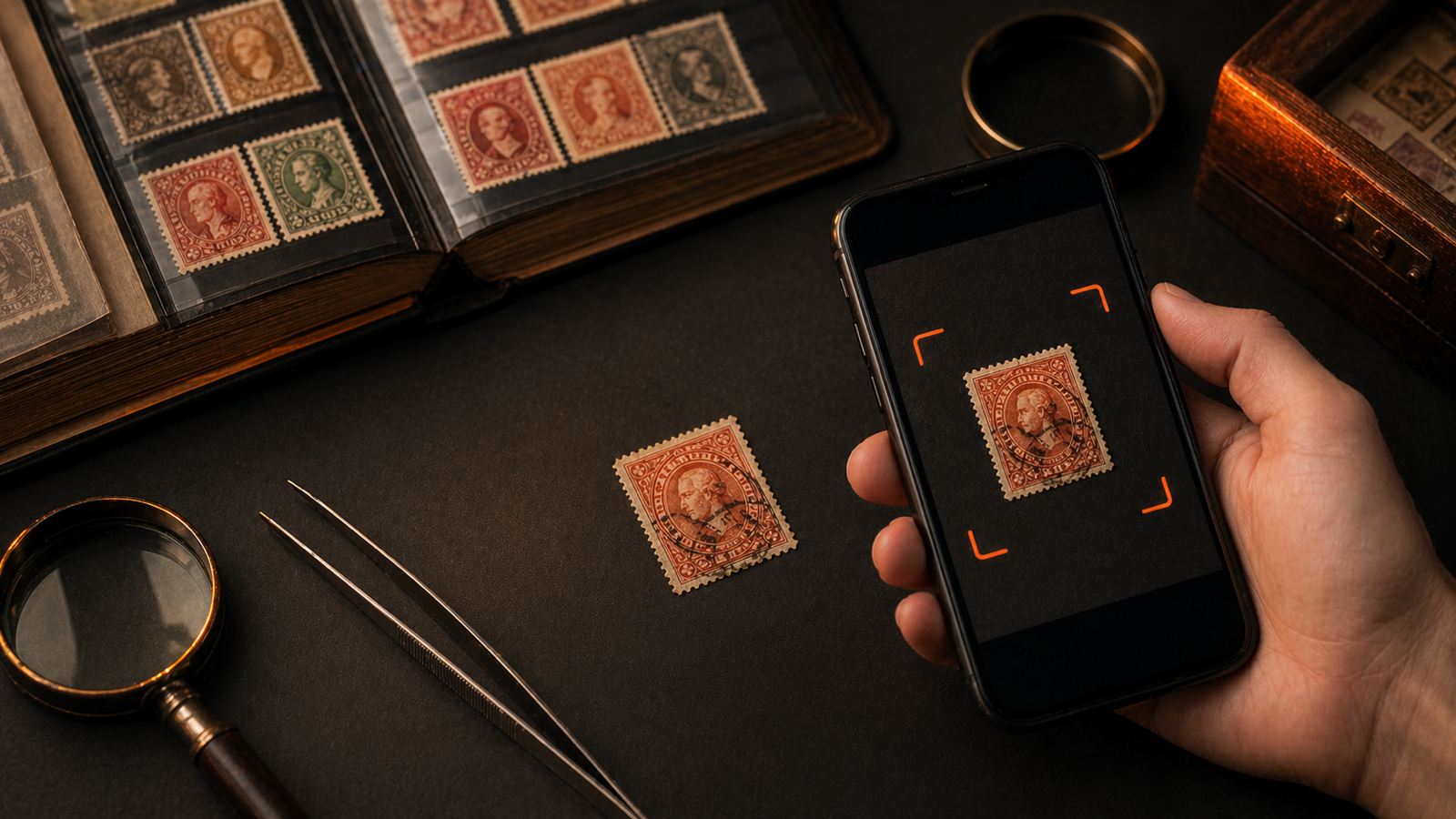
Finding an old stamp is easy. Understanding whether it has value is harder. A single album can include common postage, collectible classics, damaged examples, and the occasional stamp that deserves serious research. If you do not already know the country, year, denomination, watermark, or catalog number, even a simple search can turn into a long guessing game.
Stampy is built to make that first step faster. Instead of starting with a blank search box, you take a photo. The app uses the stamp image to identify likely matches and surface value signals: country, issue period, visible design details, rarity context, condition notes, and comparable market references. It is not a replacement for a formal appraisal, but it is a practical way to decide which stamps are common, which are collectible, and which should be checked more carefully.
This workflow also matches how people actually search: stamp value checker, stamp value identifier, stamp scanner, stamp value scanner online, and scan stamps for value all point to the same intent. Collectors and beginners want a fast answer from a photo, then a clear next step.
How a Stamp Value Scanner Works
A stamp value scanner starts with identification. Before you can estimate a stamp’s value, you need to know what the stamp is. Many issues look similar, and small differences can matter. A color shade, perforation variety, surcharge, watermark, printing error, or cancellation can change the value range.
Stampy analyzes the photo and looks for visual clues such as the design, portrait, symbols, denomination, text, color, and overall layout. Once it identifies likely matches, it gives you a starting estimate and context. That estimate helps you decide whether to keep scanning, compare recent sales, or ask a specialist for a closer look.
If your first goal is identification rather than value, the stamp identifier app guide explains the broader scan-and-identify workflow. If you want a deeper explanation of pricing factors, the full stamp value guide explains what affects price.
Scan
Take one clear photo of the stamp, keeping the full design and perforations visible.
Identify
Review the likely country, issue period, name, and design match returned by the app.
Estimate
Use rarity, condition, and market clues to decide whether the stamp deserves more research.
What You Can Learn From a Stamp Photo
A strong photo can reveal enough information to make a useful first estimate. The app may be able to recognize the stamp’s country, approximate year, subject, denomination, and design family. It can also help separate ordinary stamps from stamps that look unusual enough to investigate.
The most useful result is not a single magic number. It is a range and a direction. A scanner can tell you that a stamp appears common, that it may belong to a collectible series, or that a rare-looking feature needs confirmation. For inherited albums and estate sale lots, that kind of triage is valuable because it keeps you from spending the same amount of time on every stamp.
For high-value stamps, a photo estimate should be treated as a starting point. Physical condition, paper type, gum, watermark, repairs, and authenticity often require magnification or expert review. Use the scan to decide what deserves that attention.
How to Take a Better Stamp Photo
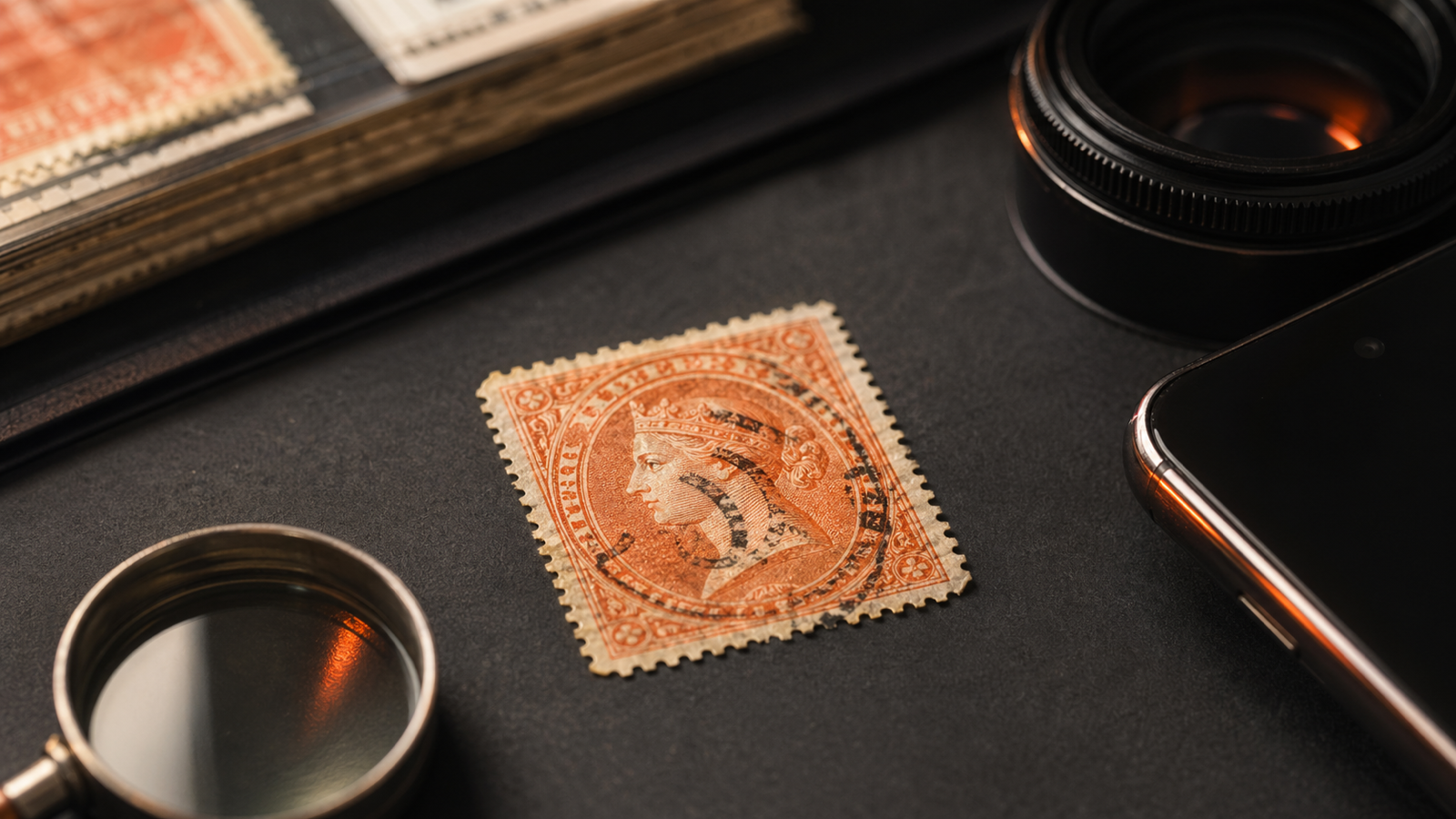
Photo quality matters. A blurry photo or glare from an album sleeve can hide the details the scanner needs. You do not need a studio setup, but a few small habits can improve results quickly.
- Scan one stamp at a time when value accuracy matters.
- Use bright, even lighting without harsh reflections.
- Keep the camera parallel to the stamp, not tilted from an angle.
- Show the complete stamp, including perforations and margins.
- Use a plain background so the stamp edges are easy to detect.
- Do not remove fragile stamps from old pages unless you know how to handle them safely.
If a stamp is still attached to an envelope, photograph the stamp first and then save a second photo of the entire cover. Postal markings, destination, and route can sometimes add value, especially for postal history collectors.
What Actually Determines Stamp Value
A stamp’s value is shaped by several factors working together. Age helps, but age alone is not enough. Many old stamps were printed in large numbers and are still common today. A newer stamp with a genuine printing error can be worth far more than an older ordinary issue.
Rarity is the biggest driver. Low print runs, recalled issues, scarce varieties, unusual overprints, and famous errors can all increase value. Condition is just as important. Centering, fresh color, clean perforations, original gum, light cancellation, and the absence of tears or stains can make a major difference.
Demand also matters. Some markets have more active buyers, including classic United States stamps, Great Britain, British Commonwealth, China, early European issues, and notable postal history. A stamp can be scarce but still take longer to sell if few collectors are looking for it.
For older material, read the old stamps value guide. If you are working with a full album rather than one stamp, the stamp collection valuation guide will be more useful.
Simple rule: use Stampy to identify and estimate quickly, then verify promising stamps with recent sold listings, catalogs, a dealer, or a qualified appraiser before making a selling decision.
Scanner Estimate vs. Professional Appraisal
A scanner is ideal when you need a fast first pass. It helps you sort a collection, spot stamps worth researching, and avoid wasting time on obviously common material. For many everyday stamps, that is enough.
A professional appraisal is different. An appraiser can inspect the stamp physically, check for repairs, identify paper and watermark varieties, assess condition, and provide a more defensible valuation. That matters when a stamp appears valuable, when you need insurance documentation, or when you plan to sell a collection.
If the scan suggests something unusual, do not clean, soak, trim, or repair the stamp. Store it safely, take better photos, compare recent sales, and consider expert help. For collection-level decisions, see the stamp collection appraisal guide.
Start Checking Stamp Value With Stampy
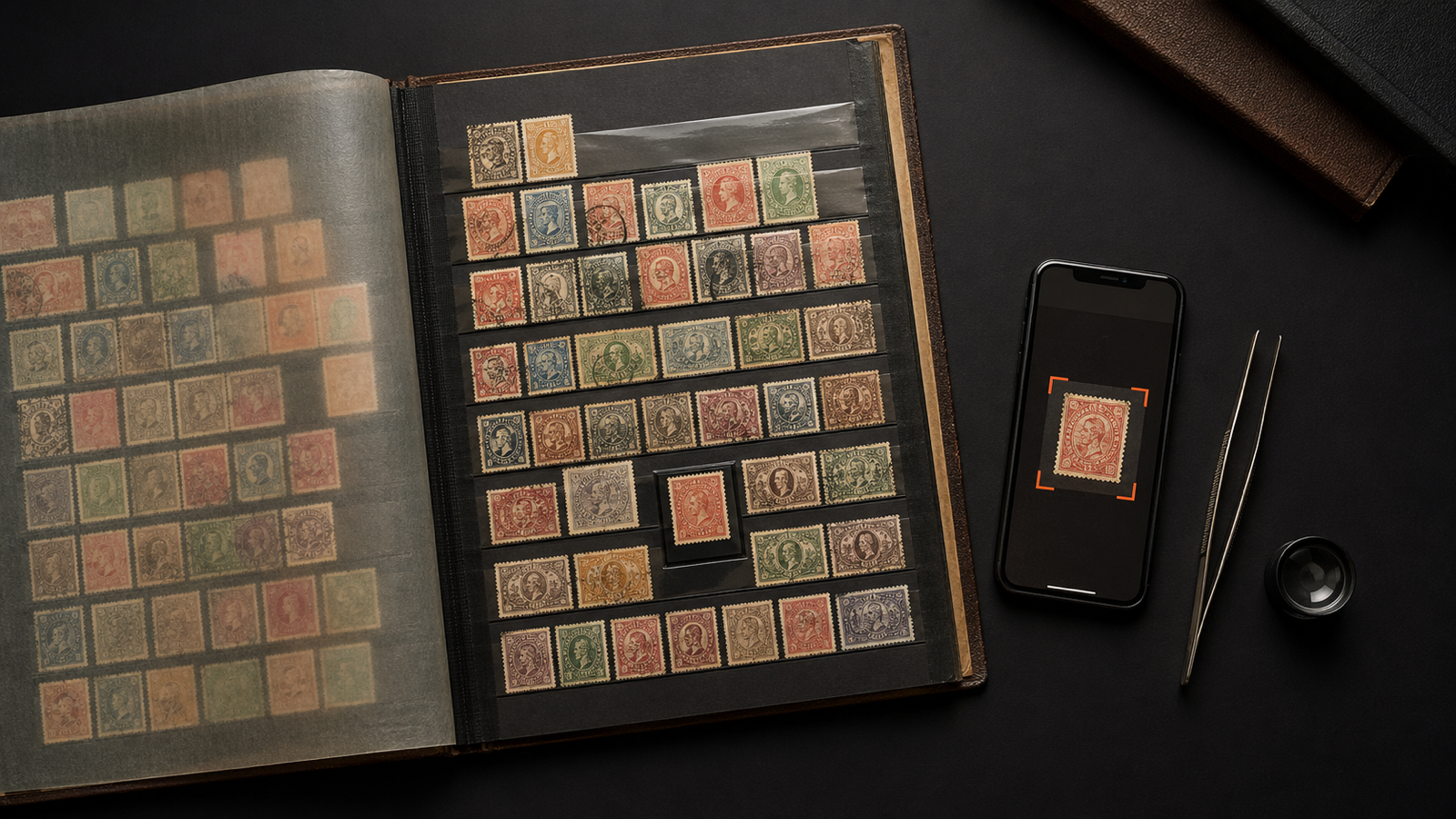
Stampy gives you a faster way to understand what you have. Scan a stamp by photo, review the identification, check the estimated value and rarity context, then decide what to keep, research, sell, or appraise. It is especially useful for inherited collections, mixed lots, estate sale finds, and old albums where you do not know the background of every stamp.
The best approach is simple: scan the clearest stamps first, mark anything unusual, and build a shortlist for deeper research. Over time, you will learn which details matter most and which stamps are likely to be common.
Scan Your First Stamp
Download Stampy and use your iPhone as a stamp value scanner. Identify stamps by picture, estimate value and rarity, and save the stamps you want to research further.
Stamp Value Scanner FAQ
How accurate is a stamp value scanner?
A scanner is best used as a fast identification and estimate tool. Accuracy depends on photo quality, market data, and whether the stamp has varieties that require physical inspection. Confirm expensive stamps with a specialist.
Can Stampy work as a stamp value checker?
Yes. Stampy works as a stamp value checker by identifying the stamp from a photo and showing value signals such as rarity, condition clues, and comparable market context.
Can I scan a whole album at once?
You can photograph album pages for organization, but one stamp at a time usually gives better identification and value estimates. Start with older, unusual, or high-denomination stamps.
Does condition affect the value estimate?
Yes. Centering, color, gum, cancellation, perforations, creases, stains, tears, and repairs can all affect value. Two copies of the same stamp can have very different prices.
What should I do if a scan shows a high value?
Do not alter the stamp. Store it safely, take additional clear photos, compare recent sold listings, and consider a professional appraisal or expert certification before selling.
Frequently asked questions
What does the scanner actually measure?
It reads the design, the country, the year and where possible the catalogue number, then matches those against comparable listings to produce a range. It does not grade condition — centring, hinging, gum and faults change value substantially and need a human eye.
Why is the value shown as a range instead of one number?
Because that is what the market gives. The same stamp in different condition sells at different prices, and a single figure would imply a precision that does not exist. The range reflects the spread in the listings the scan found.
Is a scan enough to sell a stamp?
It is enough to decide whether selling is worth pursuing. A buyer or auction house will want the stamp itself, and for anything valuable a certificate from a recognised authentication service.
Does the scanner handle stamps that are still on the envelope?
It can read the design, but a stamp on cover is valued differently from a loose stamp — sometimes for more, when the postmark or the route matters. Treat the estimate as being about the stamp only.