
How to Determine the Value of Stamps: Complete Guide
Stamp value depends on more than age. A stamp may be common even if it looks old, while a small printing error, rare variety, clean condition, or strong collector demand can make another stamp worth much more. This guide explains how to check stamp value, what details matter, and when to use an app, catalog, marketplace data, or professional appraisal.
What Stamp Value Really Means
When collectors talk about stamp value, they usually mean a realistic market estimate, not the original postage amount printed on the stamp. A five cent stamp can be worth a few cents, a few dollars, or far more depending on the exact issue. The same design can also have multiple varieties, papers, perforations, watermarks, cancellations, and condition grades.
The useful question is not simply “is this old?” The better question is: what exact stamp is this, how scarce is it, what condition is it in, and what are similar examples actually selling for? That is why a good valuation process starts with identification before it moves to price.
Identification
Country, year, design, denomination, watermark, perforation, and catalog variety all affect the price range.
Condition
Tears, thins, heavy hinges, missing perforations, fading, stains, and poor centering can lower value quickly.
Market Demand
A stamp is only worth what collectors are willing to pay for comparable examples in similar condition.
How to Check Stamp Value by Photo
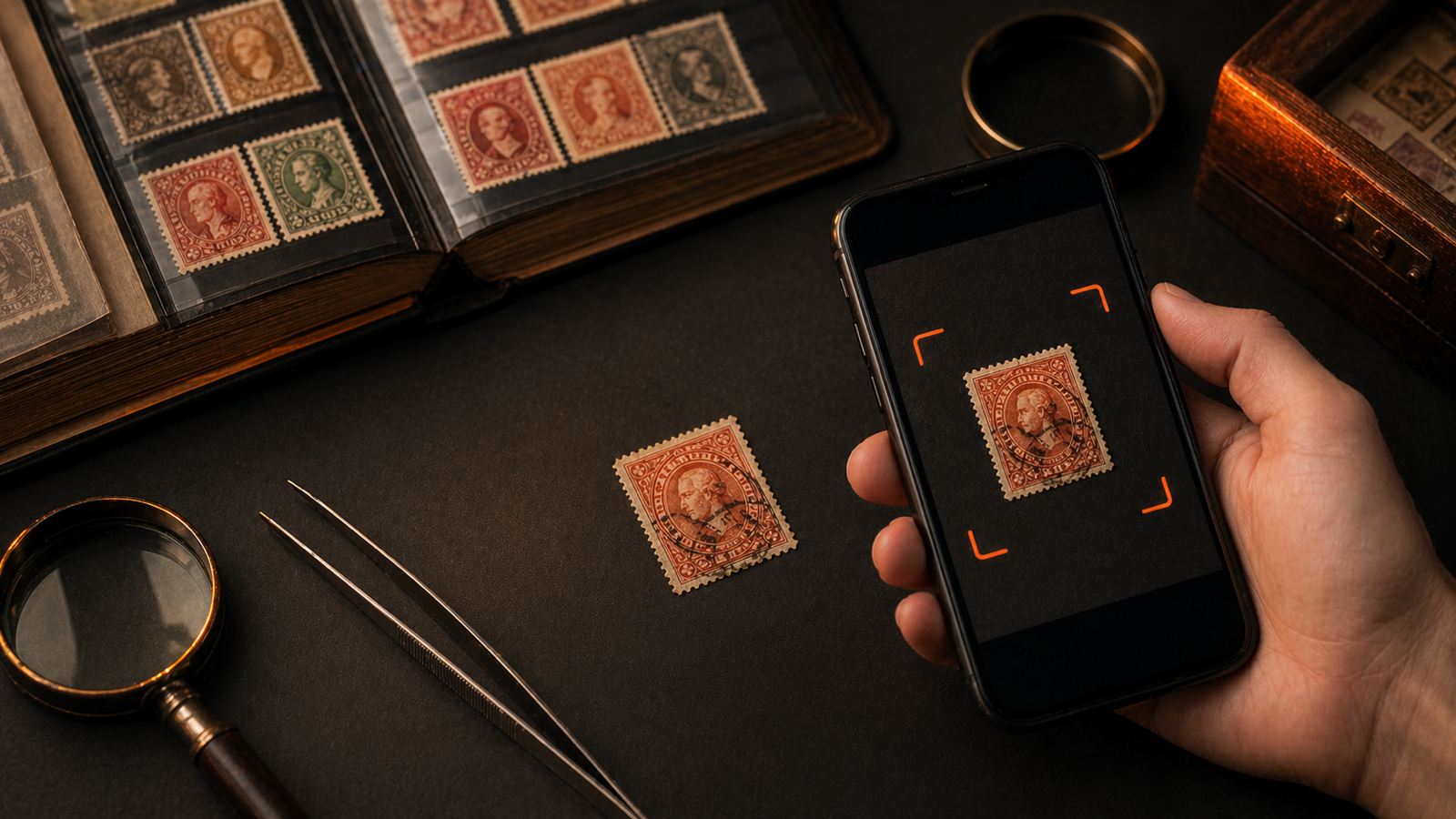
The fastest first step is to take a clear photo and identify the stamp. With Stampy’s stamp value scanner, you can scan a stamp, identify the issue, review rarity and condition clues, and get an estimated value range. This is useful when you have a single stamp, a small group, or an inherited collection that you need to sort quickly.
For the best result, photograph one stamp at a time on a plain background. Keep the stamp flat, avoid glare, and include the full perforated edge. If the back has marks, hinges, gum, or expert signatures, photograph that too. The front helps identify the stamp; the back often helps understand condition.
A photo scan should be treated as a starting point, not a final auction guarantee. Use it to narrow the stamp, spot possible rare issues, and decide which pieces deserve deeper research.
Factors That Determine Stamp Value
Most stamp valuation comes down to a few repeatable factors. If you understand these, you can avoid two common mistakes: assuming every old stamp is valuable, or throwing away a rare stamp because it looks ordinary.
- Rarity: low print runs, rare surviving examples, unusual varieties, and short-lived issues can increase value.
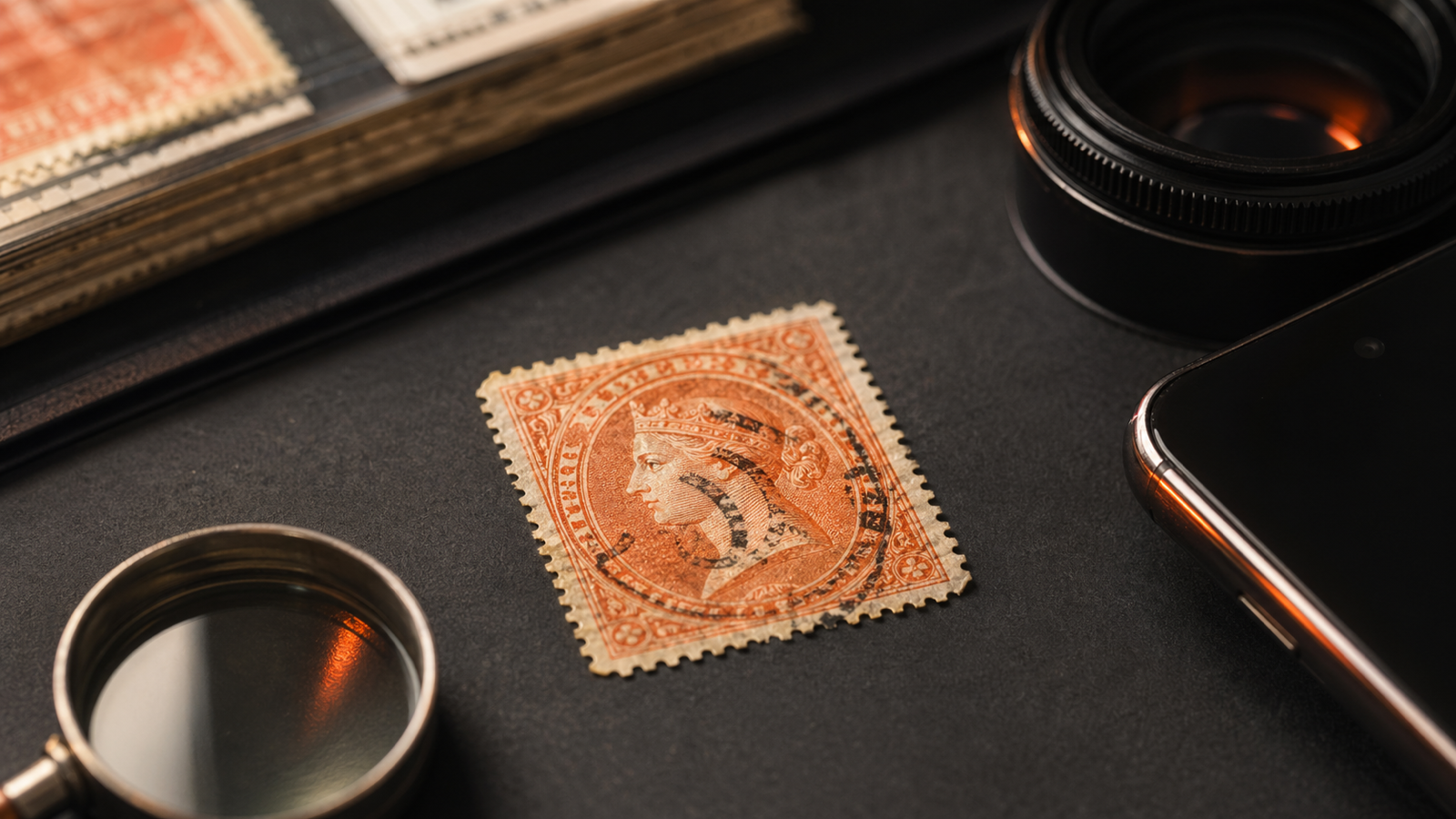
- Condition: clean paper, strong color, full perforations, and good centering usually matter more than beginners expect.
- Unused vs used: mint stamps with original gum can be worth more, but some used stamps with scarce cancellations are collectible too.
- Errors and varieties: inverted centers, missing colors, wrong perforations, plate flaws, or watermark differences can change the price dramatically.
- Demand: classic stamps from popular countries often have deeper buyer pools than obscure issues with limited collector interest.
Catalogs are helpful, but catalog value is not the same as a guaranteed selling price. Realized prices, current dealer listings, and marketplace comparisons give a better picture of what buyers are paying now.
Old, Vintage, and Antique Stamp Value
Old stamps can be exciting, but age alone does not create value. Many nineteenth and twentieth century stamps were printed in huge quantities and still exist in large numbers. Others are valuable because the exact variety is scarce, the condition is exceptional, or the stamp belongs to a famous collecting area.
If you are sorting older material, separate obvious damaged stamps from clean examples, then group them by country and era. Look for unusual colors, overprints, high denominations, early issues, and stamps that appear different from the rest of the batch. For a deeper walkthrough, use the old stamps value guide after you have identified the most promising pieces.
Be careful with “rare stamp” claims from random listings. Some sellers list common stamps at unrealistic prices. A better method is to compare multiple sold or completed examples in similar condition.
Stamp Collection Value vs Single Stamp Value
A collection is not always worth the total of every individual catalog value. Dealers and buyers usually look at the quality of the best items, the amount of duplicate common material, organization, condition, and how much work is needed to resell it. A collection with a few strong stamps can be more valuable than a large album full of common damaged pieces.
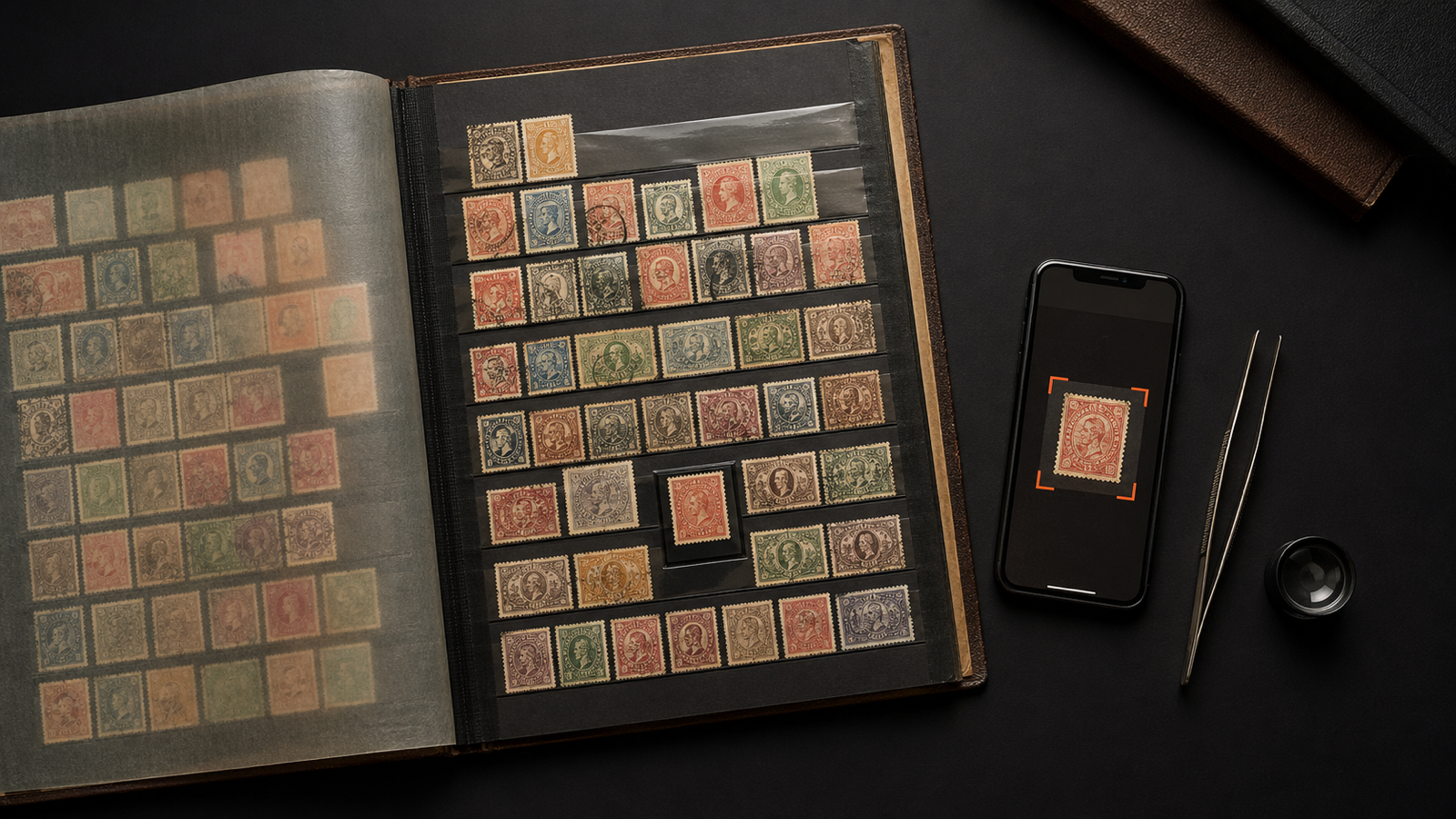
If you have an inherited album or boxes of stamps, start with a quick triage. Scan or identify the best-looking stamps first, especially older issues, high denominations, and anything that appears unusual. Then estimate groups rather than trying to price thousands of common stamps one by one. The stamp collection valuation guide explains how to think about full albums and larger lots.
When to Get a Stamp Appraisal
Use an app and online research for fast sorting, but get a professional opinion when the potential value is high, the stamp appears to be a rare variety, or you plan to insure, inherit, donate, or sell a serious collection. An expert can inspect paper, gum, repairs, watermarks, perforations, and authenticity in ways a photo cannot always prove.
A paid appraisal makes the most sense when there is enough value to justify the cost. If most stamps are common, a quick scan and basic market check may be enough. If you find possible rarities, compare your next steps in the stamp collection appraisal guide before contacting dealers or auction houses.
Before selling, keep notes on the strongest stamps, save photos, and avoid separating covers, envelopes, or album pages too quickly. Context can matter. When you are ready to compare selling options, read the guide on how to sell a stamp collection.
Simple stamp value checklist
- Identify the stamp by country, year, design, and variety.
- Check condition on the front and back.
- Compare similar sold examples, not only active asking prices.
- Separate common material from possible rare or high-value pieces.
- Use professional appraisal for serious collections or suspected rarities.
Start with a clear scan
Download Stampy and use your iPhone to identify stamps by picture, estimate value, review rarity, and organize the pieces worth researching further.
Stamp Catalogs: Where Reference Values Come From
Serious stamp valuation starts with a catalog. Four systems dominate worldwide: Scott (United States), Stanley Gibbons (United Kingdom and Commonwealth), Michel (Germany and Europe), and Yvert et Tellier (France). Each assigns a catalog number and a reference value to every listed stamp.
The most important thing to understand: catalog value is not market value. Catalog figures describe a sound example sold at full retail. Real stamps typically change hands for a fraction of catalog — common material often sells for 10–30% of catalog value, while genuinely scarce stamps in premium condition can approach or exceed it. Treat the catalog number as a ceiling and a common language between collectors, not as a price you should expect.
Condition and Grading: Why Identical Stamps Differ 10x in Price
Two copies of the same stamp can differ in value by a factor of ten or more purely on condition. Dealers and auction houses look at:
- Mint vs used: a mint stamp with original gum that has never been hinged (“MNH”) usually commands the highest premium; a previously hinged mint stamp (“MH”) is worth noticeably less; used stamps depend heavily on the cancellation.
- Centering: how evenly the design sits between the perforations. Grades run from Average through Fine, Very Fine (VF), Extremely Fine (XF) to Superb — each step up can multiply the price.
- Faults: thins, creases, tears, short or pulled perforations, stains, and repairs all cut value sharply. A single thin can turn a premium stamp into a spacefiller.
- Gum condition: for mint stamps, original undisturbed gum matters; regummed stamps are worth far less and are a common trap for buyers.
- Cancellation quality: on used stamps, a light, clear, dated cancel is preferred; heavy ink obliterating the design reduces value.
Where to Sell Stamps: Options Compared
| Channel | Best for | Typical cost | Trade-offs |
|---|---|---|---|
| Specialist auction house | Rare single stamps and strong collections | Roughly 10–20% seller commission | Best prices for genuinely scarce material; takes weeks to months |
| Stamp dealer | Fast, simple sales | Dealer margin built into offer | Instant payment, but expect a wholesale price |
| Online marketplaces (eBay, Delcampe, HipStamp) | Mid-range stamps with known demand | Site fees around 10–15% | You control pricing; requires photos, listings, and patience |
| Stamp club or society circuit | Common and mid-range material | Small commission | Slower, but knowledgeable buyers and fair treatment |
Whichever route you choose, get more than one opinion before selling anything you suspect is valuable, and never clean, soak, or “improve” a stamp before an expert has seen it — restoration attempts usually destroy value.
Stamp Value FAQ
How do I determine the value of stamps?
First identify the exact stamp, then review condition, rarity, and recent market prices for similar examples. A stamp value app can help with identification and initial estimates, while catalogs and professional appraisers help confirm higher-value items.
Can I check stamp value online for free?
You can do basic research online by comparing images, sold listings, and catalog references. Free research is useful for sorting, but rare stamps and serious collections may still need expert review.
Are old stamps always valuable?
No. Many old stamps are common because they were printed in large numbers. Value depends on the exact issue, condition, rarity, demand, and whether the stamp has important varieties or errors.
Does a used stamp have value?
Yes, some used stamps can be valuable, especially scarce classics, rare cancellations, covers, and varieties. However, heavy cancellation, damage, or poor centering can reduce value.
Should I sell a stamp after an app estimate?
Use an app estimate as a starting point. If the scan suggests a high value, verify the stamp with additional research or an appraiser before selling, especially if authenticity or condition could change the price.
How can I find the value of old stamps for free?
Three free routes work without buying a catalogue. Check completed sales rather than asking prices on eBay and Delcampe, since only sold listings show what someone actually paid. Search the stamp’s catalogue number in an online catalogue’s free tier for a reference figure, remembering that catalogue value is a ceiling rather than a market price. Finally, local stamp clubs and society meetings will often look at a collection at no charge.
What year stamps are worth money?
Age on its own does not decide value. The stamps that consistently fetch high prices are pre-1900 issues, printing errors and colour varieties from any year, short-lived issues from small or short-lived territories, and covers with rare postal routes. Nineteenth-century definitives printed in the hundreds of millions can still be worth cents, while a 1918 error is worth six figures — the variety and the condition matter far more than the date.