
Stamp Identification Guide: Identify Old Stamps
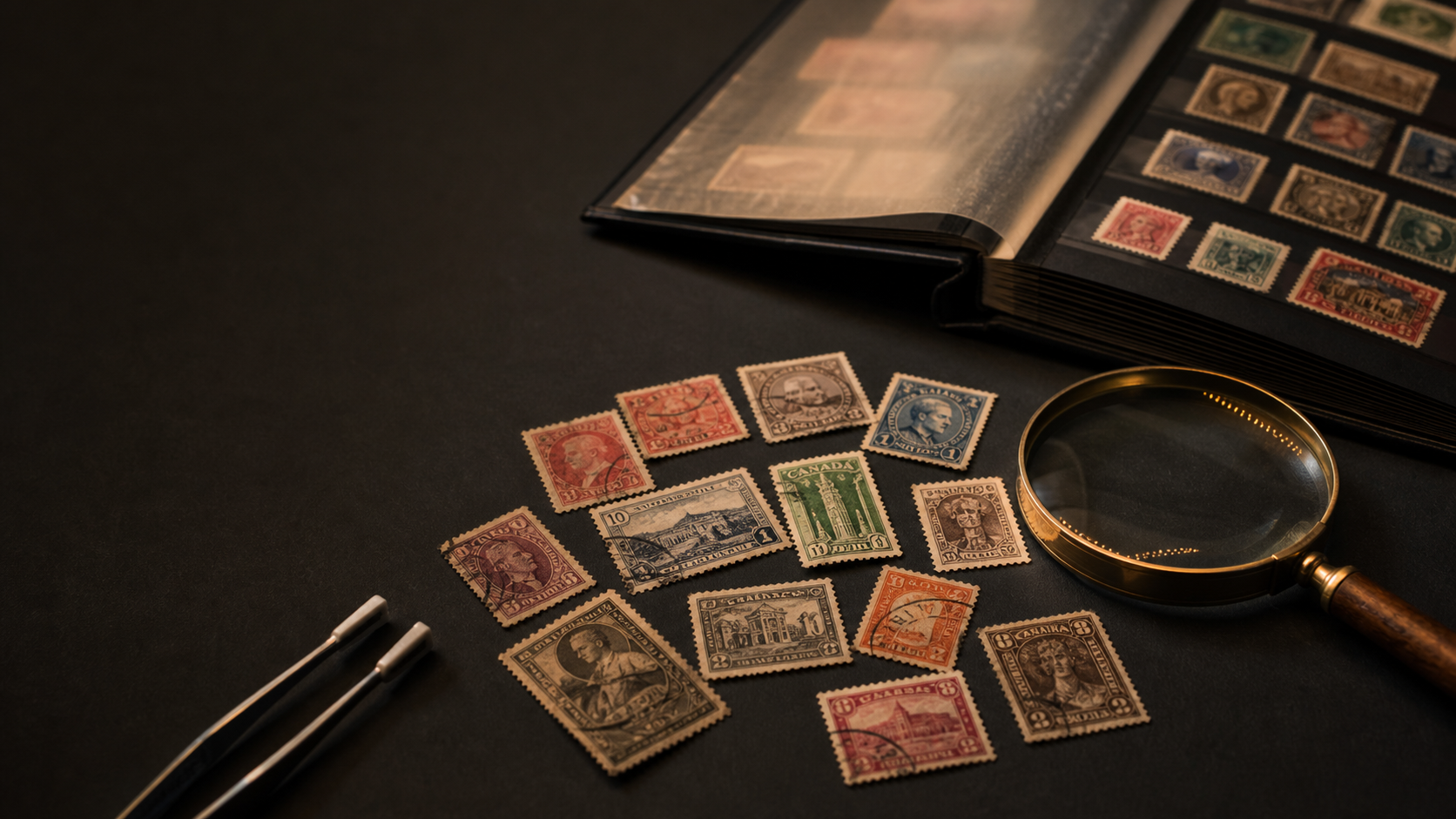
Stamp identification is the process of working out what a stamp is: its country, issue, denomination, design, date range, condition, and value clues. Once you know those basics, it becomes much easier to decide whether a stamp is common, collectible, worth scanning, or worth expert review.
What Is Stamp Identification?
Stamp identification means narrowing a stamp down from a loose visual object to a specific postal issue. A complete identification may include country, year, denomination, subject, color, perforation, watermark, printing method, catalog number, and variety.
For beginners, the goal is not to become a catalog expert overnight. The goal is to avoid guessing. Many stamps have lookalikes, and small details can change the answer. A stamp that seems ordinary may have a better variety, while a stamp that looks rare online may be a common version of the same design.
A good identification workflow gives you a reliable starting point before you check value, appraise a collection, or sell anything.
It also keeps your research organized when several similar stamps appear on the same album page.
Country
Start with the issuing country, language, symbols, monarch, map, currency, or postal inscription.
Issue
Match the design, denomination, color, date range, and printing details to a specific issue.
Condition
Check centering, gum, cancellation, faults, perforations, and paper before judging value.
Step 1: Identify Country and Design
Look for the country name first. Many stamps show it clearly, but older and foreign stamps can be harder. Great Britain is a special case because classic British stamps often show the monarch instead of a country name. Other stamps may use older country names, colonial inscriptions, local scripts, or abbreviations.
Next, identify the subject: a portrait, coat of arms, building, animal, map, historical event, or commemorative design. If the stamp shows a ruler, leader, or national symbol, that can narrow the date range quickly. If it shows an event, anniversary, or exhibition, that may point to a specific commemorative issue.
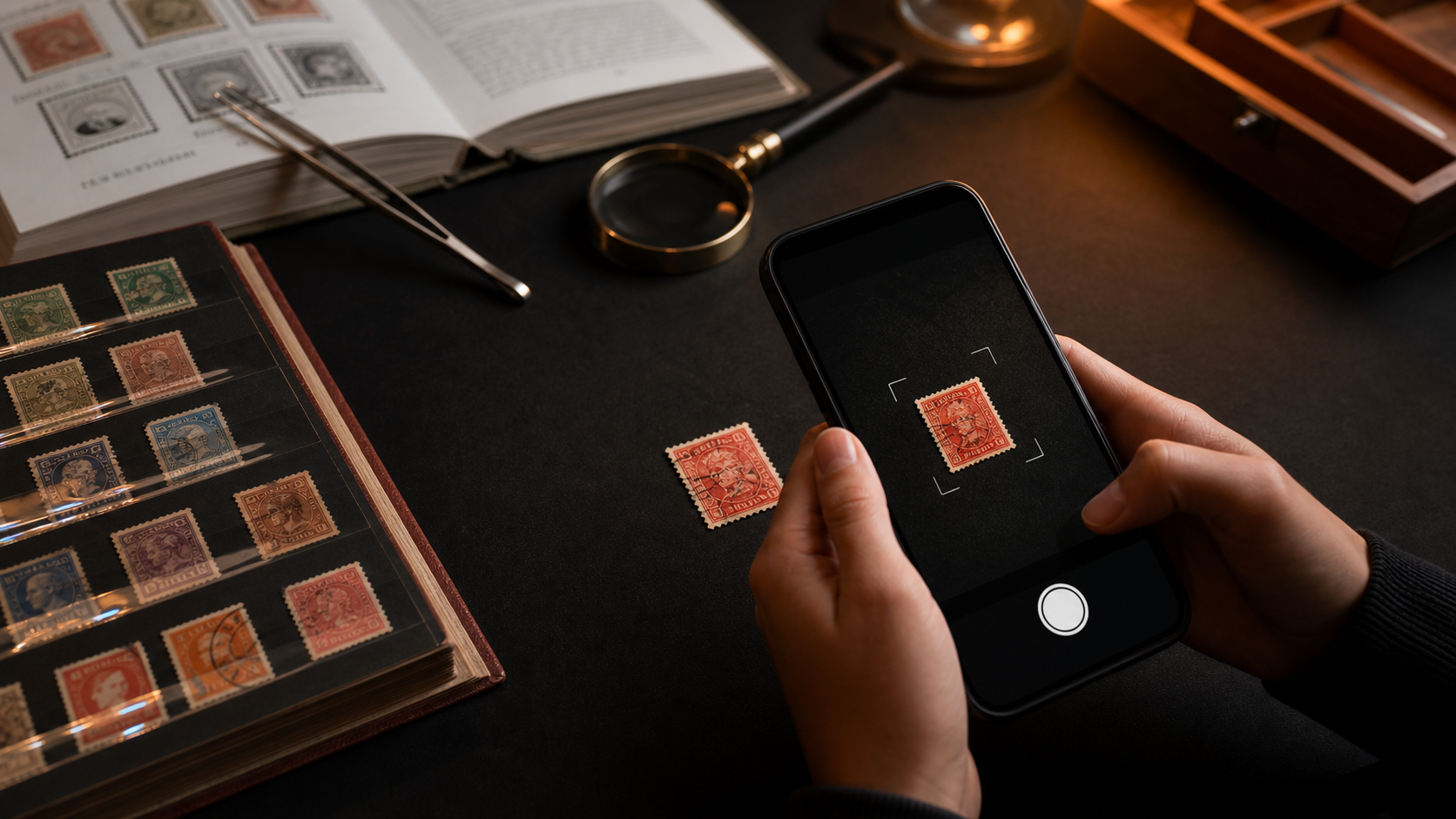
When the stamp is hard to read, take a clean photo and use Stampy’s stamp value scanner to get a first identification by picture. Then confirm details manually if the stamp appears valuable.
Step 2: Check Denomination, Color, and Date Clues
The denomination is the printed postal value: cents, pence, kopecks, francs, lire, marks, pesos, or another currency. Denomination helps separate similar designs, especially long-running definitive series where the same portrait or symbol appears on many values.
Color is useful, but be careful. Age, fading, scanner lighting, paper tone, and printing variation can make color unreliable. A “blue” stamp may have several shades, and a rare shade may need expert review. Treat color as a clue, not proof.
Date clues can come from cancellation marks, commemorative text, monarchs, political names, or catalog references. If a stamp is still on an envelope, do not remove it. The postmark and cover can be important for identification and value.
Step 3: Look at Perforations, Watermarks, and Paper
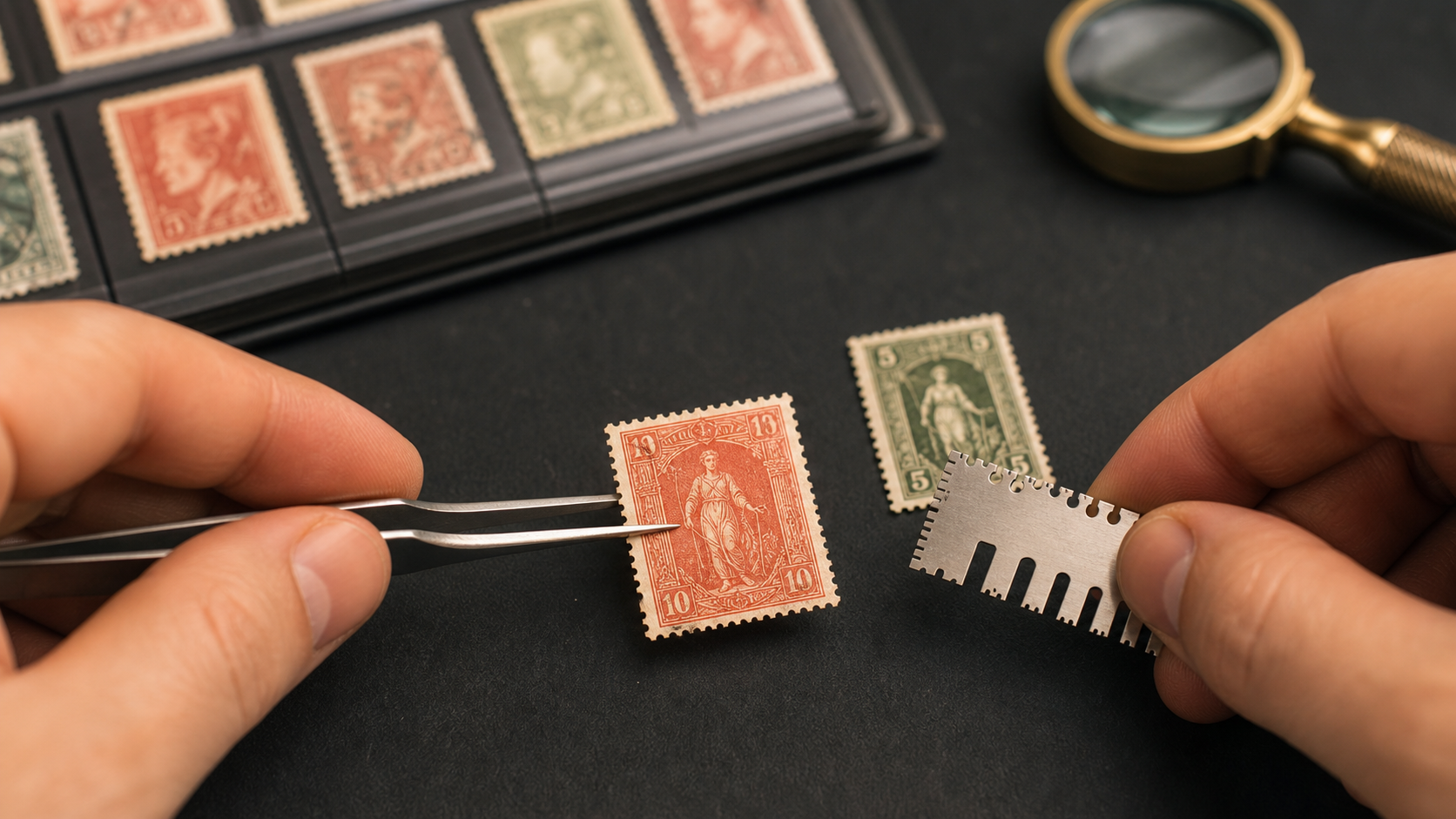
Perforations are the small holes around a stamp. Similar stamps can have different perforation measurements, and that difference may separate common issues from scarcer varieties. A perforation gauge is the traditional tool, but even a close photo can help you notice whether the edges are unusual.
Watermarks are designs or letters pressed into the paper during manufacturing. They are not always visible from the front. Some stamps require watermark fluid or specialist handling, so do not experiment on a stamp that may be valuable.
Paper also matters. Wove paper, laid paper, chalky paper, thin paper, and different gum types can all help identify a stamp. Beginners do not need to master every paper type immediately, but they should know that paper can be part of the answer.
Step 4: Compare Condition and Value Signals
Identification and value are connected, but they are not the same thing. A stamp can be correctly identified and still have little value if it is common or damaged. It can also be a better issue but sell for less because of tears, thins, stains, missing perforations, heavy cancellation, or poor centering.
Once you identify a stamp, compare it with the stamp value guide to understand what affects price. For older material, the old stamps value guide can help you avoid the common mistake of assuming every old stamp is rare.
Strong value signals include early issues, scarce countries, error varieties, unusually clean condition, old covers, certificates, rare cancellations, and high denominations. Weak signals include heavy damage, common modern issues, mass-produced commemoratives, and large groups of duplicates.
Stamp Identification App vs Catalog Research
A stamp identification app is fastest when you have many stamps and need a first pass. It helps you move from “unknown stamp” to a likely country, design, and value range quickly. Catalog research is slower, but it is better for confirming perforations, watermarks, rare varieties, and specialist details.
The best workflow combines both. Use an app to screen the collection, then research the promising stamps more carefully. If a scan suggests a strong value, compare completed sales and consider professional review before selling.
Do not treat any single method as perfect. A clear photo can miss watermark details, a catalog can be hard to use without the right country and issue family, and marketplace listings can confuse asking prices with real value. Identification is strongest when the same answer survives several checks: visual match, country clue, denomination, perforation, paper, and market comparison.
If you are reviewing a full inherited album, start with the stamp collection valuation guide. It will help you decide which stamps need individual identification and which parts can be treated as common bulk material.
Quick identification checklist
- Photograph the stamp clearly, front and back if needed.
- Find country, language, denomination, and visible date clues.
- Compare design, color, perforations, watermark, and paper.
- Check condition before assuming value.
- Use a scanner app for first-pass identification, then confirm important stamps.
- For valuable-looking material, consider professional appraisal before selling.
Identify your stamp by photo
Download Stampy to scan a stamp, identify the issue, estimate value, and decide which pieces deserve deeper research.
Stamp Identification FAQ
How do I identify an old stamp?
Start with country, denomination, design, color, and cancellation clues. Then compare perforations, watermark, paper, and condition against catalog references or a reliable identification app.
Can I identify a stamp from a picture?
Yes. A clear photo can identify many stamps quickly. For rare varieties, watermarks, repairs, or expensive stamps, photo identification should be confirmed with deeper research or expert review.
Why does my stamp have no country name?
Some stamps use monarch portraits, symbols, old country names, local scripts, or colonial inscriptions. Great Britain is the classic example of stamps that may not show a country name.
Does identifying a stamp tell me its value?
Identification is the first step. Value also depends on rarity, condition, demand, gum, cancellation, faults, and recent market sales.
When should I get expert stamp identification?
Use expert review when a stamp may be valuable, appears to be an error, has a certificate question, or will be sold, insured, donated, or included in an estate decision.