How to Start a Stamp Collection: Beginner Guide
Stamp collections are easiest to build when you start with a clear theme, handle every stamp carefully, and learn how to identify value clues before buying more. This guide shows you how to start a stamp collection without wasting money on damaged lots, random duplicates, or supplies you do not need yet.
What Are Stamp Collections?
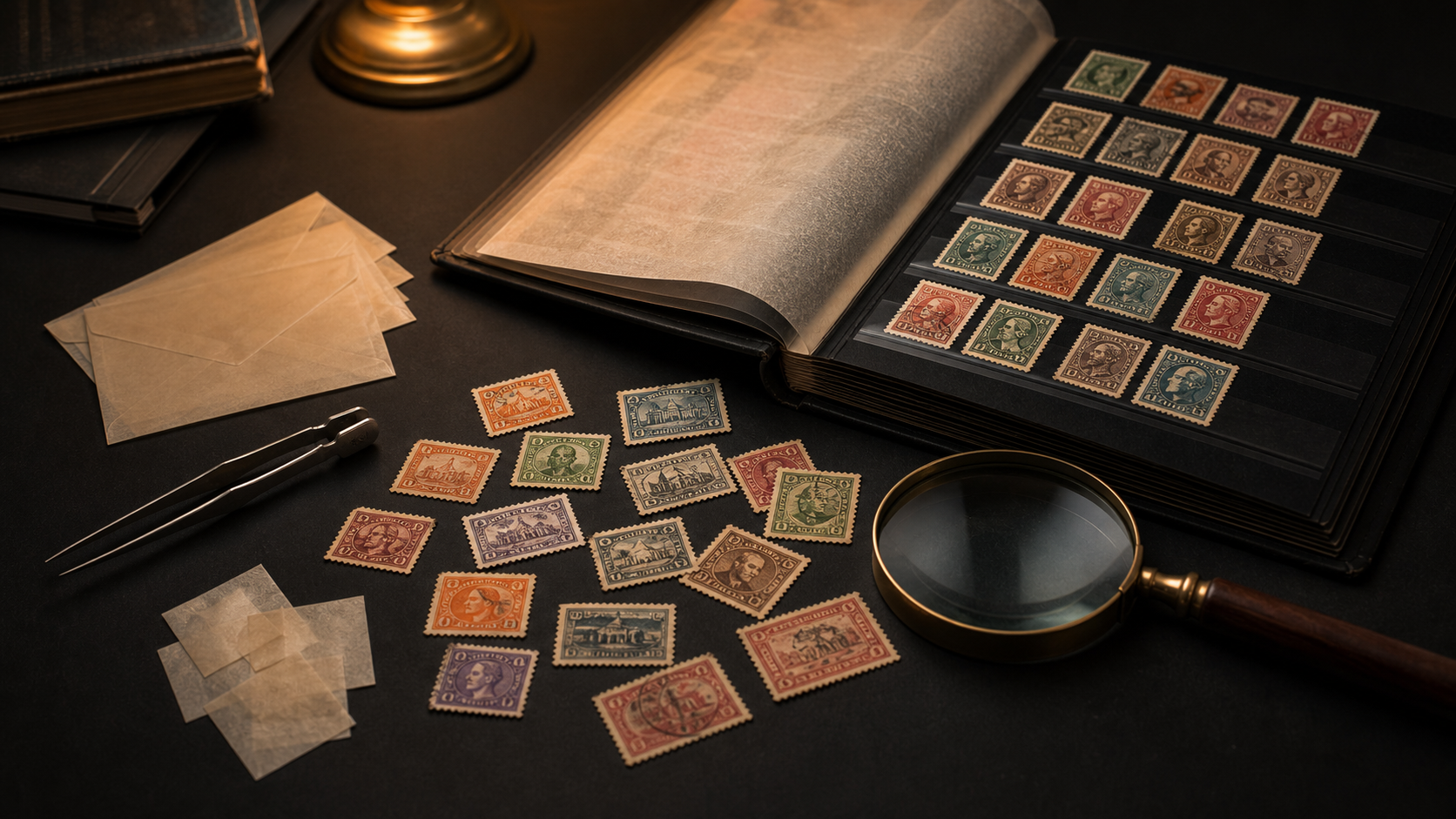
A stamp collection is a group of postage stamps organized around a purpose. Some collectors build albums by country, others focus on a historical period, one design type, postal history, errors, topical themes, or stamps from family letters. The best early collection is not always the largest one. It is the one you can understand, protect, and improve over time.
For beginners, stamp collecting can feel confusing because two stamps that look similar may have very different values. Paper, perforations, watermark, cancellation, gum, centering, and condition all matter. That is why the first goal is not to buy as many stamps as possible. The first goal is to learn what each stamp is, where it came from, and whether it deserves more research.
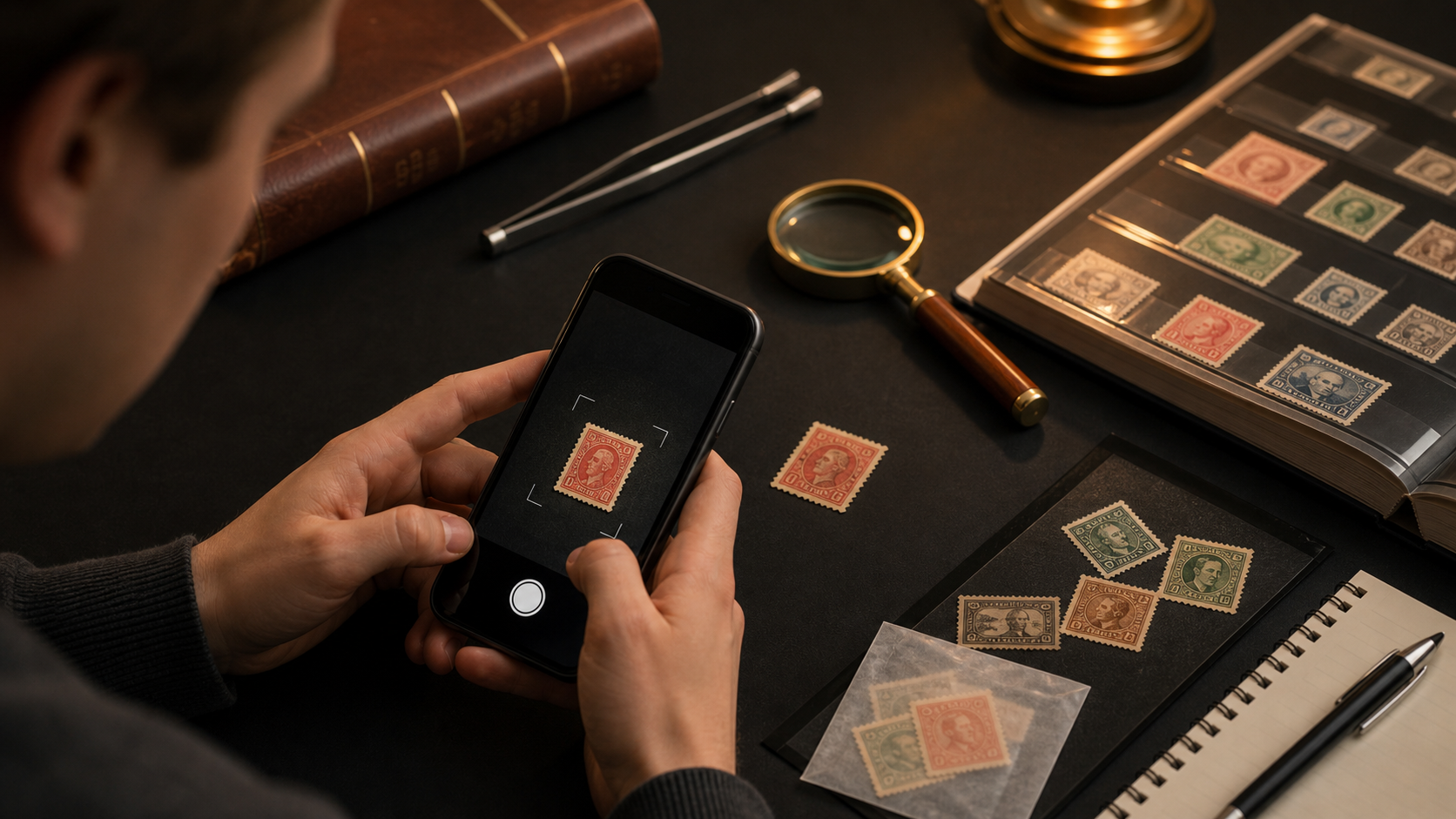
If you inherited albums or a box of old envelopes, do not soak, clean, trim, or separate everything immediately. Start by photographing and sorting. A quick scan with Stampy can help you identify country, issue, rarity clues, and estimated value before you decide what needs deeper catalog work.
Step 1: Choose a Collection Theme
A theme keeps your collection focused. Without one, beginners often end up with piles of unrelated stamps and no clear way to judge progress. Pick a theme that matches what you already enjoy or what you already own.
Country or Region
Collect stamps from the United States, Great Britain, Germany, France, Italy, or another country that interests you. This is the easiest structure for album pages.
Topic or Design
Build around animals, ships, art, space, sports, royalty, aviation, or historic events. Topical collecting is friendly for beginners because the visual theme is easy to recognize.
Period or Condition
Focus on classic stamps, modern commemoratives, mint stamps, used stamps, covers, or postal history. This gives you a clearer path for research and storage.
If you are starting from an inherited lot, choose a temporary theme first. For example, separate by country, then by age, then by condition. Later, you can decide whether the collection should become a general album, a country collection, or a set of better stamps prepared for appraisal.
Step 2: Get the Right Stamp Collecting Tools
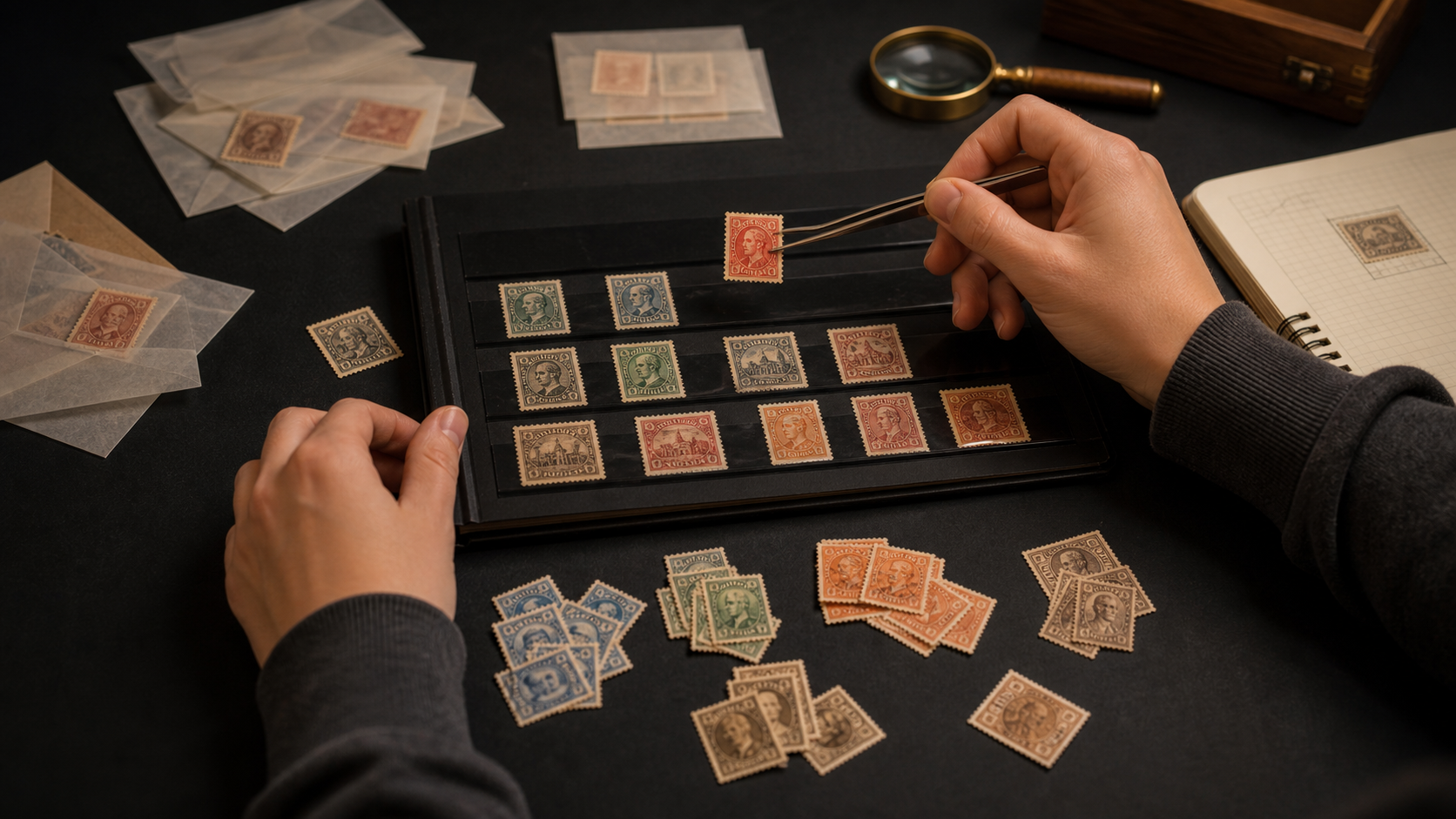
You do not need expensive equipment on day one, but you do need tools that protect the stamps. The most important rule is simple: avoid touching valuable-looking stamps with bare fingers. Skin oil and pressure can damage paper, gum, and perforations.
- Stamp tongs for handling stamps without bending or staining them.
- Glassine envelopes for temporary storage and sorting.
- A stockbook or album with safe pages for long-term organization.
- A magnifying glass to inspect perforations, printing, cancellations, and damage.
- A clean dark surface for photographing and sorting stamps.
Wait before buying a large printed album. If you are still deciding what to collect, a stockbook is more flexible. You can move stamps around, group duplicates, and build a better structure as your knowledge grows.
Step 3: Find Stamps Without Overpaying
Good beginner sources include family mail, inherited boxes, small auction lots, local dealers, stamp clubs, estate sales, and inexpensive mixed packets. The risk is buying a large lot because it looks old, only to discover that most stamps are common or damaged.
Before spending real money, compare the lot with known market prices. Search completed auction listings, check similar stamps, and learn how condition affects value. If you are unsure whether a stamp is rare or ordinary, scan it and compare the result with the stamp value scanner workflow before making a decision.
Be cautious with phrases like “unsearched estate collection” or “rare old stamps” when there is no clear identification. Some lots are honest beginner material. Others are mostly duplicates that have already been checked by someone else. Buy learning material cheaply, and save larger purchases for stamps you can identify.
Step 4: Identify and Store Stamps Safely
Identification is where stamp collections become more interesting. Start with the visible clues: country, denomination, portrait or subject, language, postmark, color, and design. Then look for harder clues such as watermark, perforation measurement, paper type, overprint, or printing variety.
Use the stamp identification guide when you need a step-by-step process for old or unfamiliar stamps. If your main question is value, pair identification with the stamp value guide so you can understand why two similar stamps may sell for very different prices.
For storage, keep stamps flat, dry, and away from sunlight. Do not tape stamps to paper. Do not glue them into albums. Do not laminate them. If a stamp is still on an old envelope or cover, think twice before removing it. Postal history can sometimes be more interesting than the loose stamp alone.
How to Build Value Over Time
Most beginner stamp collections become valuable through better selection, not just more volume. A box of thousands of common damaged stamps may be less useful than one small album of clean, identified issues. Your job is to slowly replace confusion with knowledge.
As you sort, create three groups: keep, research, and sell or trade. Keep stamps that fit your theme. Research anything old, unusually clean, misprinted, scarce, or hard to identify. Trade duplicates or low-interest material so the collection becomes easier to manage.
Condition is one of the biggest value drivers. Look for missing perforations, tears, thins, creases, heavy cancellations, stains, fading, and trimmed edges. If you are checking inherited material, the old stamps value guide can help you separate interesting vintage stamps from ordinary material.
If a collection starts to look valuable, slow down and document it. Photograph important stamps, keep notes, and compare estimates against current sale prices. Before selling a full album, read the guide on how to sell a stamp collection so you understand dealers, auctions, marketplaces, and appraisal options.
Build Your First Stamp Collection With Better Data
Use Stampy to identify stamps by photo, estimate value, track interesting finds, and decide what deserves deeper research before you buy, sell, or reorganize your collection.
Stamp Collections FAQ
Are stamp collections still worth starting?
Yes. Stamp collections are still worth starting if you enjoy history, design, geography, and the process of discovery. Most collections are not instantly valuable, but focused collecting can build knowledge and preserve interesting pieces over time.
What is the best first stamp collection theme?
The best first theme is usually a country, topic, or time period that you already like. Beginners often do well with a country collection, a topical collection, or an inherited collection organized by country first.
Should I remove stamps from old envelopes?
Not immediately. Some stamps on envelopes have postal history value because of the postmark, route, date, sender, or destination. Photograph and identify them first before removing anything.
How do I know if a stamp in my collection is valuable?
Start by identifying the exact issue, then check condition, rarity, demand, and recent sale prices. A stamp value estimate is a useful first screen, but high-value stamps should be reviewed by a qualified expert.
What tools do I need to start collecting stamps?
Start with stamp tongs, glassine envelopes, a stockbook, a magnifying glass, and a clean surface for sorting. Add specialized tools like watermark fluid or a perforation gauge later if your collection needs deeper research.