
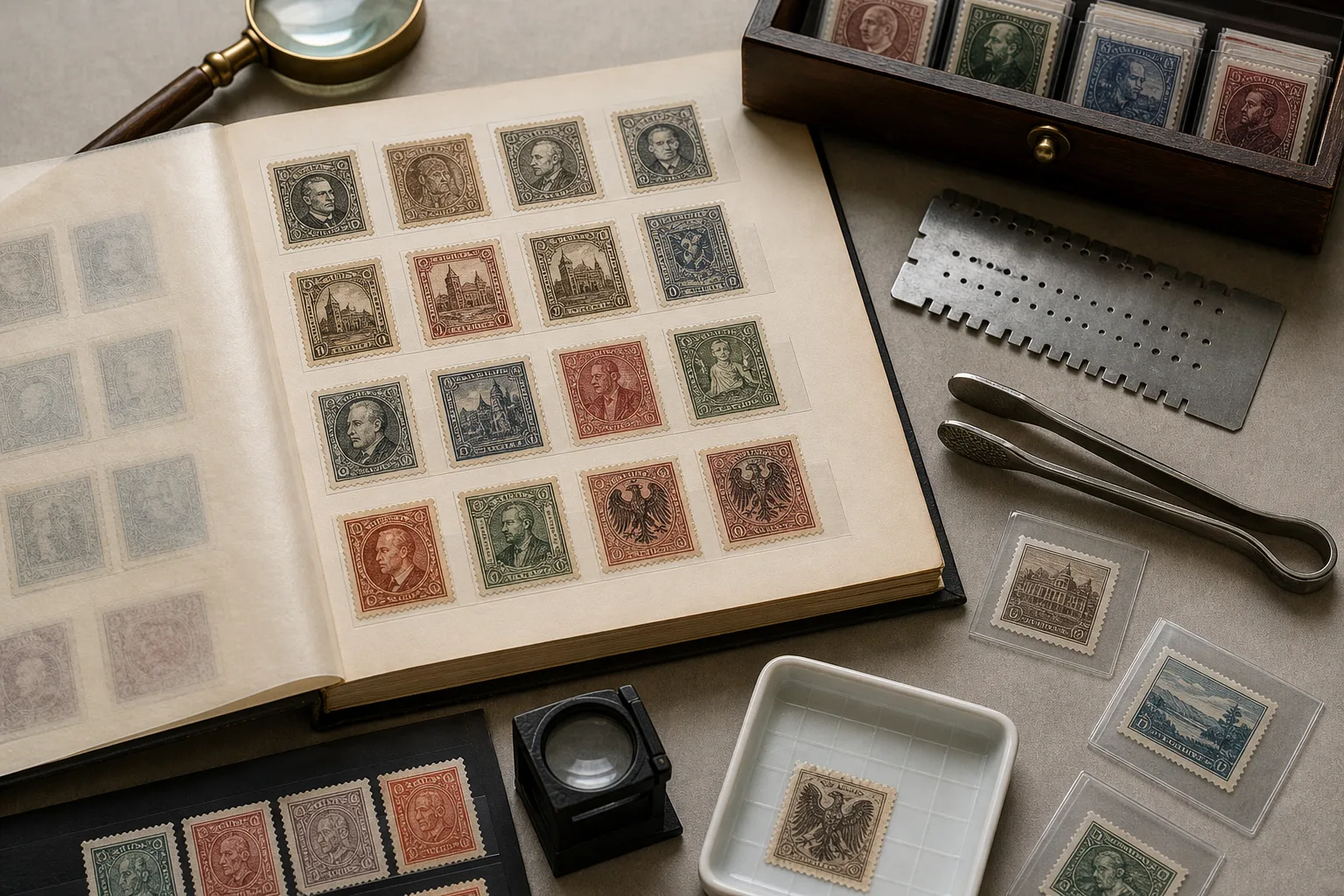
Some German stamps are worth money, but an old German stamp is not automatically rare or valuable. The strongest candidates are correctly identified issues with genuine scarcity, collector demand, sound condition, and—when the stakes are high—reliable authentication. Many ordinary Germania and later German stamps are affordable, so begin by identifying the exact issue rather than assuming age alone creates value. Source (accessed 2026-09-22)
Start by placing the stamp in the right German collecting area
“Germany” on an album page can cover several very different collecting fields. Separate early German states, such as Baden, Bavaria, and Saxony, from Deutsches Reich material, local or territorial issues, occupation and postwar issues, and modern Germany. This first sort matters because the same design feature—an overprint, a color shade, or a cancellation—can mean very different things in different periods.
Do not identify a stamp from a country name alone. Record exactly what you can see: the inscription, denomination and currency, design, color, overprint, watermark if present, perforation, and cancellation. Then compare that record with a specialist catalog and a reliably identified example. For a photo-led starting point, use these stamp identification and research steps, then confirm any promising match with a catalog or specialist.
German stamps that deserve a closer look
Headline rarities are useful as identification examples, not as automatic price promises. A commonly cited group includes the Baden 9 Kreuzer Error from 1851, the Saxony 3 Pfennig Red from 1850, and the Bavaria 1 Kreuzer Black from 1849. A stamp must match the relevant issue in design, color, denomination, printing characteristics, and condition before it should be treated as comparable to one of these named examples. Source (accessed 2026-09-22)
Bavarian material can be worth money, especially early issues and scarce varieties, but “Bavaria” is a collecting area rather than a value verdict. Likewise, Deutsches Reich stamps attract sustained attention because there are many identifiable series, varieties, overprints, and postal-history uses to study. Most stamps from either area still need an exact catalog identification and condition assessment before a value estimate is meaningful.
German hyperinflation-era stamps are another area where face value can mislead. Large denominations are often historically interesting but not necessarily scarce; postal use, issue variety, condition, and genuine markings can matter more than the printed amount. For focused context, see value factors for German inflation-era stamps.
What usually creates value
Collectors and buyers assess several factors together. Rarity matters, but so do demand, historical significance, identifiable errors, legitimate overprints, survival rates, and provenance. A scarce stamp with a repair or doubtful overprint may sell for far less than a sound, certified example. Conversely, a common design in exceptional condition can be more desirable than a damaged example of a better catalog number.
Be especially cautious with apparent errors. A shifted print, missing color, inverted element, or unusual surcharge can be important only when it is a recognized production variety. Fading, chemical alteration, trimmed perforations, removed cancellations, or added ink can imitate a variety. Treat an unexpected feature as a question for comparison and expert review—not proof of rarity.
A useful first screen is simple: look for an early state issue, a clearly different color from the ordinary stamp, an unusual but crisp overprint, an uncommon higher denomination, an intact unused example, or a cover with a meaningful postmark and complete address. Then look for reasons it might not qualify: creases, thins, tears, short perforations, regummed backs, reperforation, altered ink, or a vague photo that conceals detail.
Condition can change the result dramatically
For unused stamps, buyers examine original gum, hinges, gum disturbance, and whether the back appears altered. For used stamps, they examine whether the cancellation is genuine, appropriate to the issue, and distracting or attractive. On both, centering, fresh color, full perforations, paper soundness, and freedom from repairs matter. A tiny thin spot or repaired tear can make a major difference, particularly for early German states and better Deutsches Reich issues.
Handle promising stamps by the edges with stamp tongs. Do not soak, clean, press, reglue, or try to remove a hinge before you know what you have. Keep each item in an inert mount or sleeve, away from heat, moisture, tape, and direct sunlight. Preserve covers intact: separating a stamp from its envelope can destroy postal-history evidence.
A practical identification workflow
-
Make a clear record before moving the stamp. Photograph the front and back in even light, include the full perforations, and capture close views of any overprint or cancellation.
-
Transcribe the visible inscription exactly, including spelling, punctuation, and currency. Note the denomination, dominant color, design subject, and whether it is used or unused.
-
Check physical details. Look for a watermark only with appropriate tools, measure perforation when needed, and compare the stamp against catalog images rather than relying on a general web-image match.
-
Search for the exact issue and variety. Compare more than one reliable reference, especially where colors, watermarks, perforations, or overprints separate a common stamp from a scarce one.
-
Assess condition honestly. Record faults as well as strengths; they are part of the value evidence.
-
For a likely high-value item, pause before listing or selling. Obtain specialist advice or authentication first.
Stampy can help organize an initial identification and value-estimation inquiry from clear images, but it should not replace specialist examination for a scarce early issue, a possible error, or a stamp with a potentially altered overprint. For broader context on the signals collectors use, read which postage stamps collectors consider valuable.
Catalog value, dealer estimate, and sale price are not the same
A catalog value is a reference figure assigned to a specified issue and grade; it is not a guaranteed cash offer. A dealer estimate reflects a dealer’s view of marketability and condition. An auction realization is the price achieved for one described lot at one sale, while a marketplace asking price is only a seller’s request. Private-sale prices can differ again because the buyer, timing, return rights, and level of expertise differ.
When comparing prices, match the exact stamp and the exact condition. Check whether a figure refers to unused or used condition, whether faults were disclosed, whether an expert certificate was included, and whether buyer charges are included. Auction archives illustrate why this distinction matters: listings can show both catalog figures and different sold amounts for individual German lots. Source (accessed 2026-09-22)
For a cautious framework when you encounter a price online, see what a current stamp price means. Use it to form a range and research plan, not a guaranteed selling price.
When authentication is worth seeking
Authentication is most useful when a stamp’s value depends on a detail that a photograph cannot settle: a watermark, genuine gum, perforation measurement, printing variety, color shade, overprint, cancellation, or absence of repair. It is also prudent before paying for, insuring, or selling a stamp represented as a major rarity. The German expert association BPP provides information about philatelic expertizing and its experts. Source (accessed 2026-09-22)
Document the item before sending it anywhere. Save full-front and full-back photographs, record dimensions and visible marks, retain prior invoices or album notes, and ask in writing about fees, insurance, turnaround, and the form of the opinion or certificate. Choose a specialist whose expertise matches the relevant German area.
Selling a potentially valuable German stamp safely
For common material, a specialist dealer may be the most practical route. For a scarce single stamp, an established philatelic auction may provide better exposure and documented bidding. For collections, ask whether the buyer is valuing the collection as a whole or selecting only the strongest items. Obtain more than one informed opinion when the item appears significant.
Do not rely on a dramatic online claim, a single asking price, or a country-of-origin label. The sound path is identify, preserve, compare like with like, verify the feature that creates value, and then choose a selling channel suited to the stamp. That approach protects both collectors and inheritors from undervaluing a genuine rarity—or overvaluing a common stamp.
Are Bavarian stamps worth money?
Some are, particularly scarce early issues and recognized varieties in strong condition. Many others are affordable. Identify the exact Bavaria issue, then compare its condition and authenticity with catalog and specialist references before estimating value.
Do German stamps from the inflation period have value?
They can, but a very large printed denomination is not enough by itself. Look for the exact issue, postal use, variety, condition, and evidence that any unusual feature is genuine.
What should I photograph for an appraisal?
Photograph the complete front and back, all corners and perforations, any watermark or overprint, and a close view of the cancellation. Include any album page, envelope, receipt, or certificate that documents provenance.